
The Cloud Platform Integration Framework (CPIF) provides workload integration guidance for on-boarding applications into a Microsoft Cloud Solution. CPIF describes how organizations, Microsoft Partners like Sysfore and Solution Integrators should design and deploy Cloud-targeted workloads utilizing the hybrid cloud platform and management capabilities of Azure, System Center and Windows Server.The CPIF domains have been decomposed into the following functions:

By integrating these functions directly into workloads, “platforms” can be developed which allow for further configuration by tenants to implement extended software services.
CPIF Architecture
Both public and private cloud environments provide common elements to support the running of complex workloads. While these architectures are relatively well understood in traditional on-premises physical and virtualized environments, the constructs found within the Microsoft Azure require additional planning to rationalize the infrastructure and platform capabilities found within public cloud environments. To support the development of a hosted application or service in Azure, a series of patterns are required outlining the various components required to compose a given workload Solution. These architectural patterns fall within the following categories:
- Infrastructure – Microsoft Azure is an Infrastructure- and Platform-as-a-Service Solution which is comprised of several underlying services and capabilities. These services largely can be decomposed into compute, storage and network services, however there are several capabilities which may fall outside of these definitions. Infrastructure patterns detail a given functional area of Microsoft Azure which is required to provide a given service to one or more Solutions hosted within a given Azure subscription.
- Foundation – When composing a multi-tiered application or service within Azure, several components must be used in combination to provide a suitable hosting environment. Foundation patterns compose one or more services from Microsoft Azure to support a given layer of functionality within an application. This may require the use of one or more components described in the infrastructure patterns outlined above. For example, the presentation layer of a multi-tier application requires compute, network and storage capabilities within Azure to become functional. Foundation patterns are meant to be composed with other patterns as part of a given Solution.
- Solution – Solution patterns are composed of infrastructure and/or foundation patterns to represent an end application or service being developed. It is envisioned that complex solutions would not be developed independently of other patterns. Rather, they should utilize the components and interfaces defined in each of the pattern categories outlined above.This spectrum of patterns is illustrated in the model below.
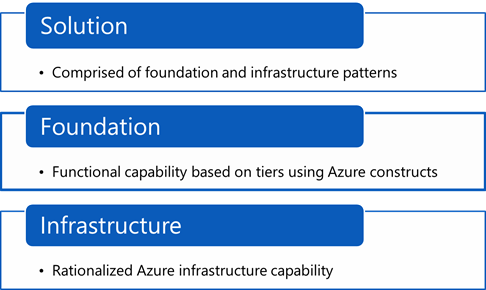
It is expected that architectural patterns for cloud-hosted workloads (applications and services) would generally adhere to this model and complex scenarios can be implemented using one or more of the pattern types outlined above. This document will provide an overview of the key architectural pattern concepts and outline some of the supporting constructs found within each architectural pattern type.
For more information on how you can integrate your architecture to the cloud, reach us at info@sysfore.com