Understanding IoT & M2M

The Internet of Things (IoT), also referred to as Internet of Everything, is the network of physical objects or “things” embedded with electronics, software, sensors and  connectivity to enable objects to exchange data with production, operator and/ or other connected devices.

The Internet of Things allows objects to be sensed and controlled remotely across existing network infrastructure, creating opportunities for more direct integration between the physical world and computer-based systems, and resulting in improved efficiency, accuracy and economic benefit. Each thing is uniquely identifiable through its embedded computing system but is able to inter-operate within the existing internet infrastructure.

“Experts estimate that the IoT will consist of almost 50 billion objects by 2020”

Things, in the IoT refer to:

  • Heart monitoring implants
  • Electric clams in coastal waters
  • Automobiles with built-in sensors
  • Field operation devices that assist fire-fighters in search and rescue etc.

The ability of things to sense their environment and report on it is immensely useful. Things can increasingly report on their own status, as well as tell us what they are doing and plan to do, which adds another layer of richness to the mix. Things can perform actions for us on request. And in an evolving IoT marketplace, more value can be derived from services related to those connected things than the things themselves.

Another integral part of IoT is how M2M (Machine to Machine) allows both wireless and and wired systems to communicate with other devices of the same type. This integration between the two brings several benefits to the industry and business in general as it has a wide range of applications mostly for monitoring but also for control purposes such as:

  • Industrial Automation
  • Logistics
  • Smart Grid
  • Smart Cities
  • Health
  • Defence etc.

Read more

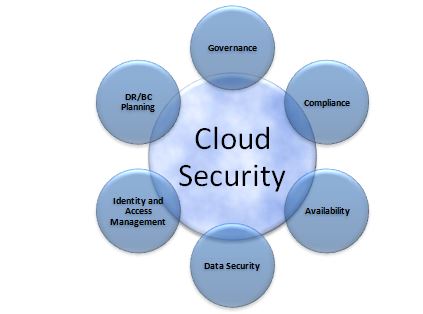
Why Cloud Security is still a Challenge!!

For many enterprises, moving business processes and data to the cloud has become a next step for improving both operational and technological capabilities. The cost savings and efficiencies created by utilizing cloud applications continue to increase, including opportunities for more business functions to be put on the cloud.

Even though the cloud continues to grow in popularity and respectability, complications with data privacy and data protection still cause alot of reluctance amongst most business leaders.

The Various Challenges of Cloud Security are:

Data Protection:

The main challenges of cloud security begin when enterprises need to keep full control of their data to ensure it’s kept private and protected. Whether it is outsourced data storage or the use of popular cloud SaaS applications, putting more data in the cloud inherently means more opportunity for unwanted or unauthorized access to that information. But cloud adoption by the enterprise is simply too compelling because of its business benefits, so enterprise Security and IT teams have to search for ways to secure their data in the cloud while permitting access and use by legitimate corporate users.

Cloud Security Read more

14 Days to go!! Windows Server 2003 End of Support – Transform your data center with Sysfore

July 14, 2015 marks a transition, which is the end of Microsoft’s support for Windows Server 2003/R2. This means you need to ensure your business has a plan to migrate the applications and workloads that are currently relying on Windows Server 2003 onto Windows Server 2012 R2 or Microsoft Azure.

Sysfore as a Microsoft partner assists you to flawlessly migrate and transform your data center with its Free Assessment process.

Why now:

Today, Windows Server 2003 is in the extended support phase, which offers a continuation of certain mainstream support items such as paid per-incident support, security updates, and ongoing use of the Microsoft Knowledge Base.

Once extended support expires on July 14, 2015, all these support activities will be eliminated. Microsoft does offer for-fee custom contracts — which extend for a limited period beyond the termination of extended support — to customers that are actively working to migrate to a next generation product. This option is intended only for organizations that are making a proactive effort to migrate off the product being supported beyond its normal life cycle.

Windows Server 2003- What end of Support means:

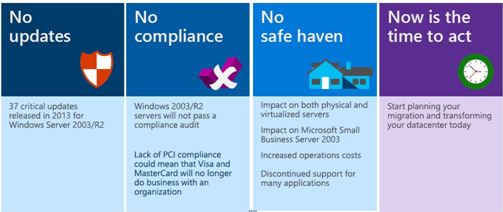
End of support for Windows Server 2003/R2 can have a dramatic impact on your business. It will mean no more updates or patches from Microsoft, which can result in a less stable and less secure infrastructure for your organization.

eos

Read more