Deliver Content Through Amazon CloudFront CDN Services

CloudFront is the Content Delivery Network (CDN) from  AWS. It is a delivery service used by businesses to distribute their static and dynamic content to the users with low latency (time it takes to load the first byte of the object), high transfer speeds and with minimum costs.

Amazon CloudFront helps to speed up distribution of your content like your HTML, CSS and image files to end users. It integrates with the other Amazon Web Services, like Amazon Simple Storage Service (Amazon S3), Amazon Elastic Compute Cloud (Amazon EC2), Amazon Elastic Load Balancing, and Amazon Route 53. It also works with the other non AWS origin servers which stores the original versions of your files.
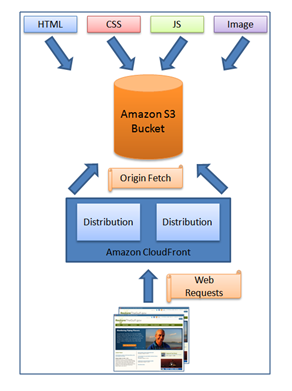
 

CloudFront CDN image

Read more

Migrating Applications to the AWS Cloud

With Amazon Web Services (AWS), you can provision compute power, storage and other resources, gaining access to a suite of elastic IT infrastructure services as your business demands them. With minimal cost and effort, you can move your application to the AWS cloud and reduce capital expenses, minimize support and administrative costs, and retain the performance, security, and reliability requirements your business demands.

One of the key differentiators of AWS’ infrastructure services is its flexibility. It gives businesses the freedom of choice to choose the programming models, languages, operating systems and databases they are already using or familiar with. As a result, many organizations are moving existing applications to the cloud today.

A successful migration largely depends on three things:

  1. The complexity of the application architecture;
  2. How loosely coupled your application is; and
  3. How much effort you are willing to put into migration.

Read more

Azure Websites, Cloud Services, and Virtual Machines comparison

With Azure, there are multiple ways to host websites – Azure Website, Cloud services and Virtual Machines.

For most web apps, Azure Websites have been the best choice. Deployment and management are integrated into the platform, sites can scale quickly to handle high traffic loads, and the built in load balancing and traffic manager provide high availability. You can easily move existing sites to Azure websites easily with an online migrating tool or create a new site using the framework and tools of your choice.

If you need more control over the web server environment, such as the ability to remote into your server or configure server startup tasks, Azure Cloud Services is typically the best option.

If you have an existing application that would require substantial modifications to run in Azure Websites or Azure Cloud Services, you could choose Azure Virtual Machines in order to simplify migrating to the cloud. However, correctly configuring, securing, and maintaining VMs requires much more time and IT expertise compared to Azure Websites and Cloud Services.

If you are considering Azure Virtual Machines, make sure you take into account the ongoing maintenance effort required to patch, update, and manage your VM environment.

The following diagram illustrates the relative degree of control versus ease of use for each of these web hosting options on Azure.websites_cloudservices_vms_3