Develop and Test on AWS

Development and Test is the application of various tools and practices when producing software. Regardless of the type of software that is developed; a proper set of development and test practices is the key to success. However, producing applications not only requires software engineers, but also IT resources, which are subject to constraints like time, money, and expertise. This is where Amazon AWS Development and Test comes into the picture. It is a reusable, automated and elastic way of pushing your application to the market.

Dev and Test Benefits

The common traits which are seen developing a cloud application are:

  • Disposable – projects start & stop, required only for short durations, need experts.
  • Numerous – many environments, overlapping dev cycles, preservations of configurations.

When you use the Dev & Test in the AWS cloud, you benefit from:

  • Unlimited elastic capacity – utilize lots of it when you need it
  • Cost optimization – throw it away when you don’t need it, pay only what you use
  • Preserve for future references – durable imaging & storage

Unlimited elastic capacity allows you to utilize lots of it when you need it. The elastic datacenter allows to set up development and test environment for rolling out applications to production. You can test at scale before production.

To effectively use the AWS Development and Test environment in your software life cycle, the following should be kept in mind.

Relevant AWS services which you require for a Dev & Test environment are:

  • Virtual Private Cloud (VPC)
  • CloudFormation – creates application stack from reusable templates, creates resources in a dependency driven order, complete console support, predefined templates.
  • Amazon APIs and SDKs – Support for multiple platforms like Microsoft .NET, Java, PHP, Python, iOS etc.

Source Control

Developing and running your source code requires a secure, easily accessible and durable environment. It should scale easily and be reusable to enable quick and fast development of your code.

Developers can self manage their source control through self installed EC2 instances, using community AMIs and AWS marketplace.

Development Environments

Developers require the suitable environment to build their applications. This can be achieved via CloudFormation. Here a VPC can be created using the predefined templates which can be integrated with the Configuration Management Tools (like Puppet, Chef etc).

You can replicate the production environment by leveraging the AWS APIs, Amazon Relational Databases, Point in Time snapshots and adopt Infrastructure as a Code strategy. This ensures that they deliver an application with high code quality, is performance tested and debugged.

Test

Amazon allows various test scenarios involving unit tests, load, performance, integration, smoke, UAT tests to be executed. You can automate them to reduce time and effort. The best testing approach would be to use automation using the APIs, use either the AMIs or the CloudFormation template matching the production environment.

Agile Development

The time to market is a crucial factor for businesses to adopt the Agile development approach for their applications. Here developers must optimize their code for rapid response to changes (requirements, design, logic etc). It requires high technical discipline with lots of automated processes.

The Agile concept involve continuous code integration, using the infrastructure as code ensuring continuous delivery.

Code integration requires a source control, a CI server that ensures automated evaluation of quality.

Infrastructure as code is just programmatic provisioning by API. Everything in AWS is an API. You can call and utilize any of the tools such as Chef, AMI, Puppet etc on any platform like Java, iOS, PHP and more. The benefits of infrastructure as code is speed, reliability, repeatability and reduced risk.

The prerequisites for continuous delivery is small batch sizes of the code base in the production environment delivered through automation.

On a closing note, development and test practices in AWS requires certain resources at certain times for the development cycle. Amazon Web Services offers a cost-effective alternative to traditional development and test infrastructures. Instead of waiting weeks or even months for hardware, you can instantly provision resources needed, instantly scale up as the workload grows, and release resources when they are no longer needed.

Sysfore Technologies can guide in implementing a Development and Test environment which suits your business needs and requirements. You can contact our cloud development experts by mailing us at  info@sysfore.com or call us at +91-80-4110-5555.
10 Things You Need to Know About Hybrid IT Strategies

The Hybrid IT Infrastructure – bringing together on-premises and cloud capabilities—is a strategy many enterprises are embracing in order to maximize the flexibility and performance they need from their IT operations. Sysfore offers the requisite cloud expertise in handling your Hybrid cloud infrastructure, on both Amazon and Azure Cloud.

Find the Right Hybrid Cloud Balance – Call us or mail our Hybrid IT Specialists to know more!

Here are ten things to think about as you consider a hybrid strategy for your organization.

1. Hybrid Cloud—The Time is Now:

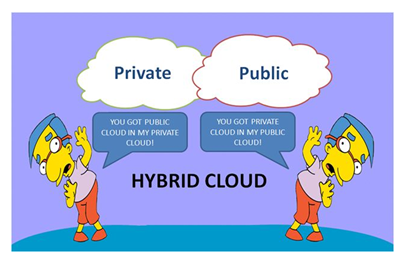
Hybrid cloud

By 2017, the research firm Gartner predicts that half of mainstream enterprises will have a hybrid infrastructure. Businesses are adopting the hybrid approach, to maximize the benefits that both the cloud and physical infrastructure have to offer: the control and easy access of an on premises/private cloud solution with the convenience, scalability, performance, cost, mobility, and collaboration benefits of a solution managed by a public, multi tenant cloud provider such as Azure or Amazon.

2. Taking ‘Shadow IT’ Out of the Shadows:

Today, more and more enterprises are seeing their employees supplementing their traditional reliance on internal IT resources by taking advantage of public cloud services. Enterprise IT departments typically see this as a troubling trend that raises important issues of security and control. But it’s also a chance for the IT to position itself as an internal service provider.

3. Right Resource for the Right Workload:

A hybrid approach gives you the option of scaling resources for each workload and choosing the best application for the job. Applications can run on whichever platform is best suited for that workload: a highly dynamic app with unknown spikes may be best supported in the public cloud while a performance-intensive application may be better off in a private cloud. Data can be located where regulatory or security requirements dictate.

4. Varying Levels of Hybrid Sophistication:

A hybrid approach can have different levels of sophistication: deep integration between cloud and private/ on-premise environments or more simplistic, static, point-to-point connections designed to serve a particular functional need.

5. ROI and Agility:

Any enterprise that has virtualized IT components within its four walls has essentially created its own internal private cloud and has achieved significant reductions in capital and operational expenses. A hybrid cloud extends this strategy with the appropriate investment in metrics, self-service software, automation features and other capabilities. It is a way to achieve significant advances in enterprise agility.

6. Start Small:

Gartner recommends starting a hybrid project with a small pilot, getting comfortable with the ins and outs of the hybrid model, then rolling it out further across the organization. Keep scalability in mind right from the start. While the pilot project may be small in scope, the infrastructure deployed should be ready for growth and capable of delivering an ROI within a defined time frame.

7. Test and Run:

A popular use case for a hybrid strategy involves developing and testing new applications in the cloud and then moving them back into the on-premises or private production environment. You can leverage the cloud environment for fast, on-demand prototype of the new applications and services which are then rapidly deployed and measured for success. Once the applications are ready, the cloud-based development environment can be ratcheted back.

8. Management:

The success of any hybrid approach is going to rest to a great degree on the infrastructure management that is put in place: control of both the public cloud and private assets from a single administrative console using a unified set of security, user, and application policies.

9. Look at Your Network:

A hybrid strategy requires a close look at your enterprise network for bandwidth and scalability. With a hybrid strategy, companies will be relying on their network to ship large amounts of data back and forth, putting far more demand on the network than previously.

10. Culture shift:

Some of the biggest challenges in moving to a hybrid infrastructure are less about the technology and more about management. Most IT departments have a culture centered around control and technical expertise and now have to accommodate a more collaborative, service-oriented approach for the provision of automated, self-service IT capabilities via the cloud.

Sysfore can help you build, secure, and seamlessly scale in the Hybrid Cloud Environment. You contact us at  info@sysfore.com or call us at +91-80-4110-5555 to understand the hybrid IT cloud better.

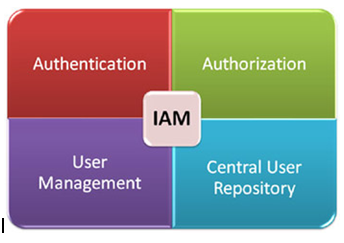
Nothing Cloudy About The Identity Access Management (IAM) future!

The future of the Cloud Identity Management (IAM) is shiny & bright, with both SMBs and enterprise businesses pouring in money to protect their data and digital assets.

A new report by Allied Market Research projects that the global cloud IAM market would garner revenue of $2.8 billion by 2020, registering a CAGR of 26.2% during the forecast period 2015 – 2020.

Join in this Cloud evolution with Sysfore and secure your business!

Cloud IAM

Varied technological environments, increasing cyber-attacks, strict regulatory compliances, and increasing digital identities across organizations, are propelling the need of IAM services for information security. With this high stake involved, it’s natural for businesses to look towards the cloud to manage their digital identities, both inside and outside an enterprise.

Traditional concepts for Identity and Access Management that have been focused on the internal IT are no longer sufficient. We still need some of these, but they cover only a fraction of the future scope – and for some organizations already today’s scope – of Identity and Access Management.

The following measures for future Identity and Access Management might help organizations shape their own strategy and roadmap for Identity and Access Management.

#1: More than humans – It’s about Identities of things, devices, services, and apps

In this connected world, everything has an identity – whether it is something like a smart meter, one of the various connected elements in connected vehicles, or wearable tech. All of them require access to be managed through apps, services, devices, etc.

The numerous identities has changed the way in which they are accessed and interfaced with other humans, things, devices, services and apps. It requires authentication and management of relationships between identities.

#2: Multiple Identity Providers – Varied options

There is no central directory anymore, neither for humans nor for all the other things and services. It’s impossible to manage millions of customers spread across the world. Plus, the customers want to re-use identities across apps, services and companies encouraging the BYOI (Bring Your Own Identity) concept.

#3: Multiple Attribute Providers – Information on identities

The Identity and Access Management, will now be the source of information for Cloud, Mobile, and Social Computing, OT (Operational Technology) security, APIs (through which the apps, services and systems interact with each other through and which need to be protected) and the apps, and the Internet of Things. There will be many sources of trust for various attributes.

#4: Multiple Identities – Many users with different identities and flexibly to switch

A single user may have multiple identities within a same organization. He could be an employee, a freelance contractor, and a customer of the same corporation all at the same time. Organizations have to understand that it is still the same person, when he switches from one account to another.

#5: Multiple Authenticators – There is no single authenticator that works for all

There are so many different types of identities and related elements, that it’s not feasible for a single method of authentication which will guarantee security of your identity. There is no single approach that we can rely on. IAM will have to support different authentication mechanisms such as Risk Based Authentication, biometrics, single sign on etc, while understanding the risk and making risk-aware access decisions.

#6: Context – Identity and Access Risk varies in context

A key concept of Future Identity and Access Management is context. Which device is someone using? Which type of authentication? Where is the device used? There are many elements that make up the context. Depending on that context, risk varies. Identity and Access Management has to become risk-based and, with the ever-changing context, dynamic. While today’s static access controls implicitly reflect a risk understanding in a static context, future access controls and decisions must become dynamic to adapt to the current context.

Keeping these fundamental measures in mind, Sysfore can help you build a secure, and protected cloud environment for your business. You contact us at  info@sysfore.com or call us at +91-80-4110-5555 to know more.